Wallace and Gromit is a beloved English stop-motion animated series created by Aardman Animations, following an inventive but hapless man and his highly intelligent dog. The films are famous for their clay animation style, very English humour, and affectionate portrayal of small-town everyday life. The closest possible parallel I could draw for an American audience might be Garfield, but even then, this is a stretch. It is truly a one-of-a-kind cultural export, and has been dear to my (and many others’) hearts since first watching this buffoon and his dog launch themselves up to the moon to find cheese.
Sadly, due to the fast-paced world of modern video entertainment, stop-motion is a dying art form, and in order to produce their latest film, Aardman had to partner with Netflix. Just as when Star Wars was taken under the wing of Disney, you could just tell something was different, despite not being able to put your finger on it. The same can be said for Vengeance Most Fowl, the latest W&G film. Nonetheless, my parents and I watched it last Christmas and despite much of the soul being noticeably stripped away, we did enjoy it - particularly the scene where W&G chase Feather McGraw along the canals in narrowboats.
Narrowboats are somewhat of a special interest of mine, and have been since seeing this video of the Bingley Five Rise locks years ago. I had a talk with my parents about how I had always wanted to go on a canal boat, but had never pursued it, unsure of how to even go about it. For reasons unknown to me, they also seemed keen to do this and that weekend we had booked a canal boat for a four-day adventure on the Llangollen Canal (pronounced clan-goc-len because Welsh is a strange language). This was a shock to me because my dad has always hated caravans and people who go on caravan holidays, and a narrowboat is essentially a buoyant caravan. I was not going to look a gift horse in the mouth, however, and took this for what it was - a potentially fun but inevitably stressful adventure.
The Infrastructure That Built Industrial Britain
“Ed, are these not just rivers?”
What a lot of people don’t realise at first glance is that the canals and the boats that travel along them were never designed for holidays. These waterways were built as part of an enormous logistics network that powered the early Industrial Revolution across much of Great Britain. Today they feel slow, quaint, and almost decorative - the sort of place you might take a quiet holiday - but two hundred years ago they were industrial arteries, moving coal, iron, stone, and manufactured goods across the country. It is a sad state of affairs that much of the culture and infrastructure Britain built gets lost in the noise due to our cultural similarity to America. The reality is that Britain is an ancient and settled land, layered with centuries of infrastructure projects that shaped the modern world. In the grand scheme of things, the United States has only existed for a few minutes, and systems like the canal network were already being built long before railways - let alone modern highways - became a thing. I will avoid going down that particular rant for now, however.
In order to properly explain what the canals are, I need to first explain why they exist in the first place. In the 1700s Britain was entering the early stages of the industrial boom that would transform it from a nation of farmers into a powerhouse few other countries could mimic. As a country, we had raw natural resources at point A and people who could transform them in point B, the issue was that the road between A and B could barely be called a road today. Moving bulk goods was slow, dangerous, and expensive - and due to the limitations of the main engine used then (horses), only around 1-2 tonnes could be transported in a single trip. This logistical bottleneck was solved by the knowledge that a horse pulling a buoyant vessel could pull 30 tonnes; thus began the Canal Age. Between roughly 1760 and 1830, Britain had entered the early stages of the Industrial Revolution, with much of our production shifting from agricultural to factory-based. These factories required enormous amounts of coal, iron, stone, and other raw materials as inputs. Due to the nature of geology, mines and quarries were very far apart, and even if you put a factory in the middle of a cluster, it would still take weeks at a time to get anything onto a loading dock. To solve this problem, thousands of miles of artificial waterways were carved into the landscape as purpose-built freight corridors. One example of this is the Bridgewater Canal, built in 1761, which connected coal mines to Manchester. This lowered the costs to move coal, increasing supply, which caused the cost of coal to drop by about half. Lower cost of an input means lower cost to produce; lower cost to produce means higher profit. It was practically overnight that investors began pouring money into the companies that produced these canals.
By the early 1800s Britain had roughly 4,000 miles of canals connecting mines, factories, and cities. It was the prototype for a modern-day freight network, and acted as the backbone that led to some of the rapid expansion of the British Empire.
“Okay… but they are just rivers… no?”
No. They are not rivers.
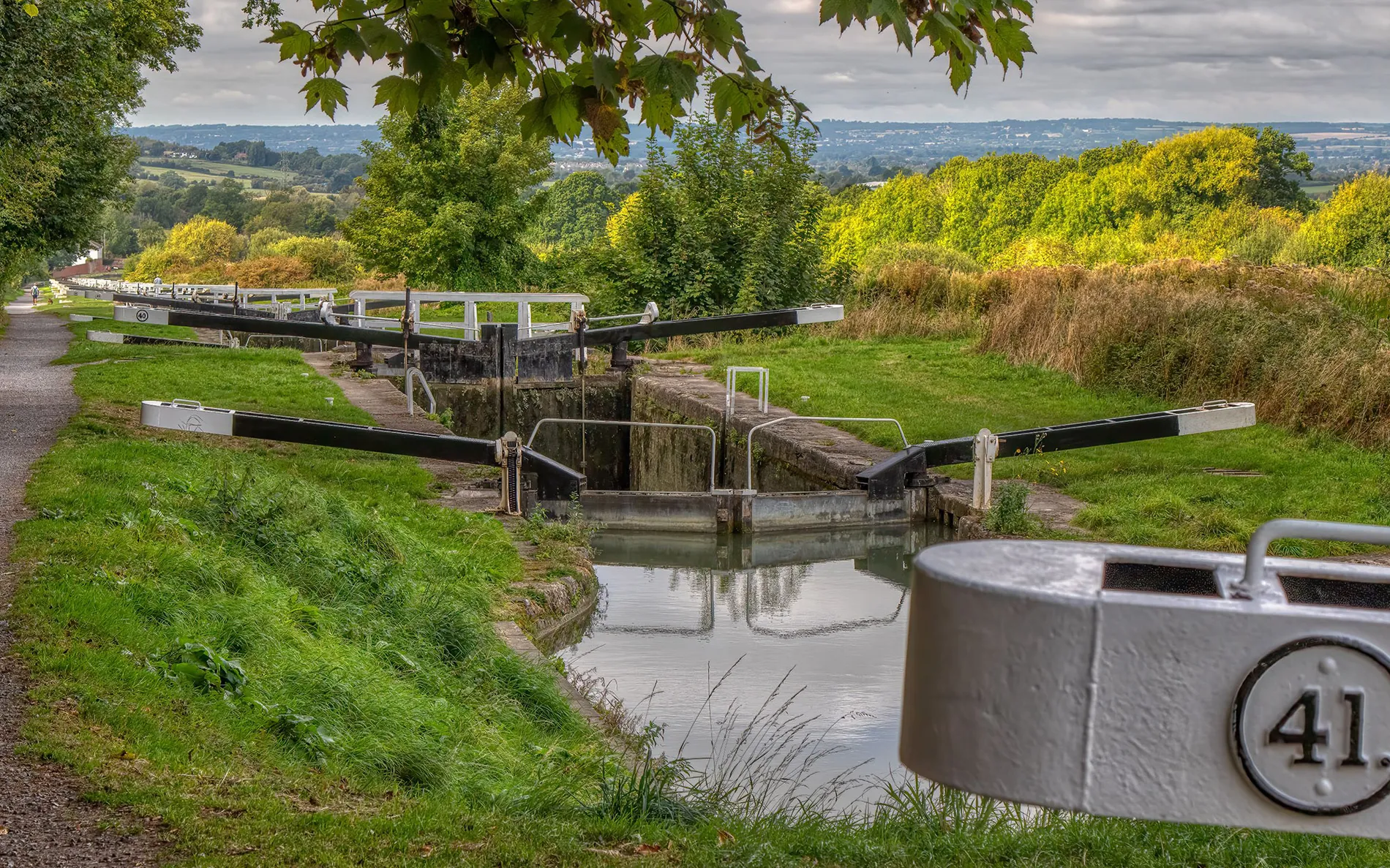
Canals are an incredibly complicated ecosystem of locks, aqueducts, towpaths, tunnels, and narrowboats along a thin man-made body of water with no current that stays exactly level except at designated points. If you want evidence that a canal is not a river, please look at the following image.
https://canalrivertrust.org.uk/
Unlike a river, the water on a canal cannot just go down and up as terrain demands; instead, you have locks - essentially water lifts. The way these work is that you have two entrances, each at a different water level. The doors swing towards the higher water level, meaning water pressure alone prevents the gates from being opened and closed. A narrowboat would cruise into the lock, the entrance would be closed, and using paddles one of two things would happen:
- If the water level in the lock is low, water would be let in from the higher side to raise the boat up.
- If the water level in the lock is high, water would be let out of the lower side to lower the boat down.
When you operate a lock yourself, it becomes obvious just how much engineering went into these waterways. What looks today like a peaceful canal holiday is actually the remains of one of the most ambitious infrastructure projects ever built in Britain. This is even further compounded by the fact that some canal systems required dozens of locks in sequence to climb hills, and this is what led to things like the Bingley Five Rise, which raised boats nearly sixty feet using five locks directly stacked on top of one another. Narrowboats were designed that way so they could fit the narrowest locks in the system, which is why they are typically at most seven feet wide.
Understanding all of this makes travelling on a canal feel slightly surreal. What today feels like a slow-moving holiday route was once part of the most advanced logistics network in the world. With that context in mind, we untied the boat, pushed away from the bank, and began our four-day journey along the Llangollen Canal.
Freedom on the Water
With that history in mind, this is the section of the canal we would be travelling. I made this map myself; it’s quite cool.
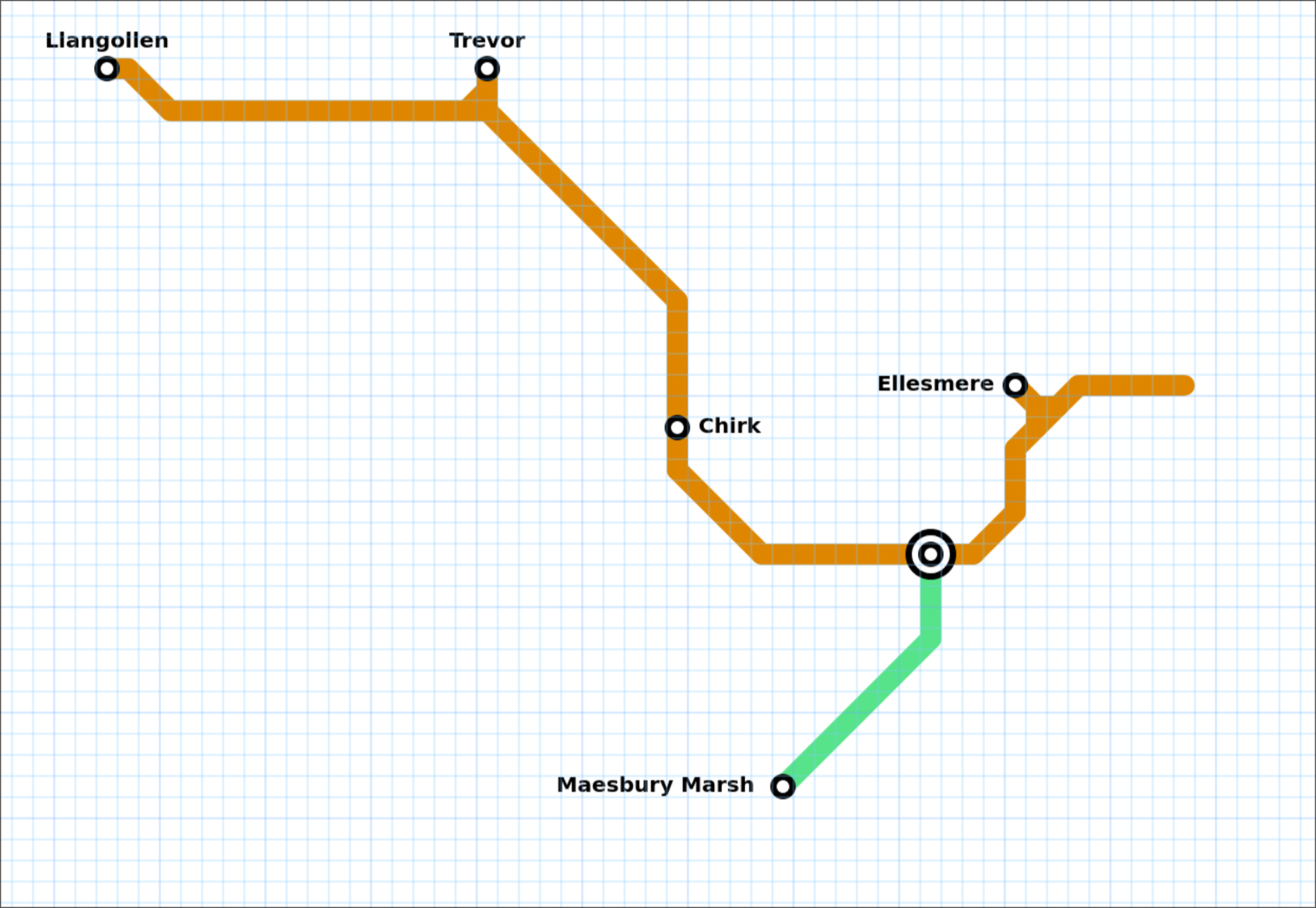
We arrived at the boatyard, signed the paperwork, loaded our stuff onto the boat, had a short 20-minute induction… and that was it. We were effectively handed a boat and a windlass and told, “Don’t sink it”. We set off from Trevor heading for Ellesmere. Just outside of Trevor is the Pontcysyllte Aqueduct. It is 12 feet wide and is the longest aqueduct in Great Britain as well as the highest canal aqueduct in the world. It looks like this:
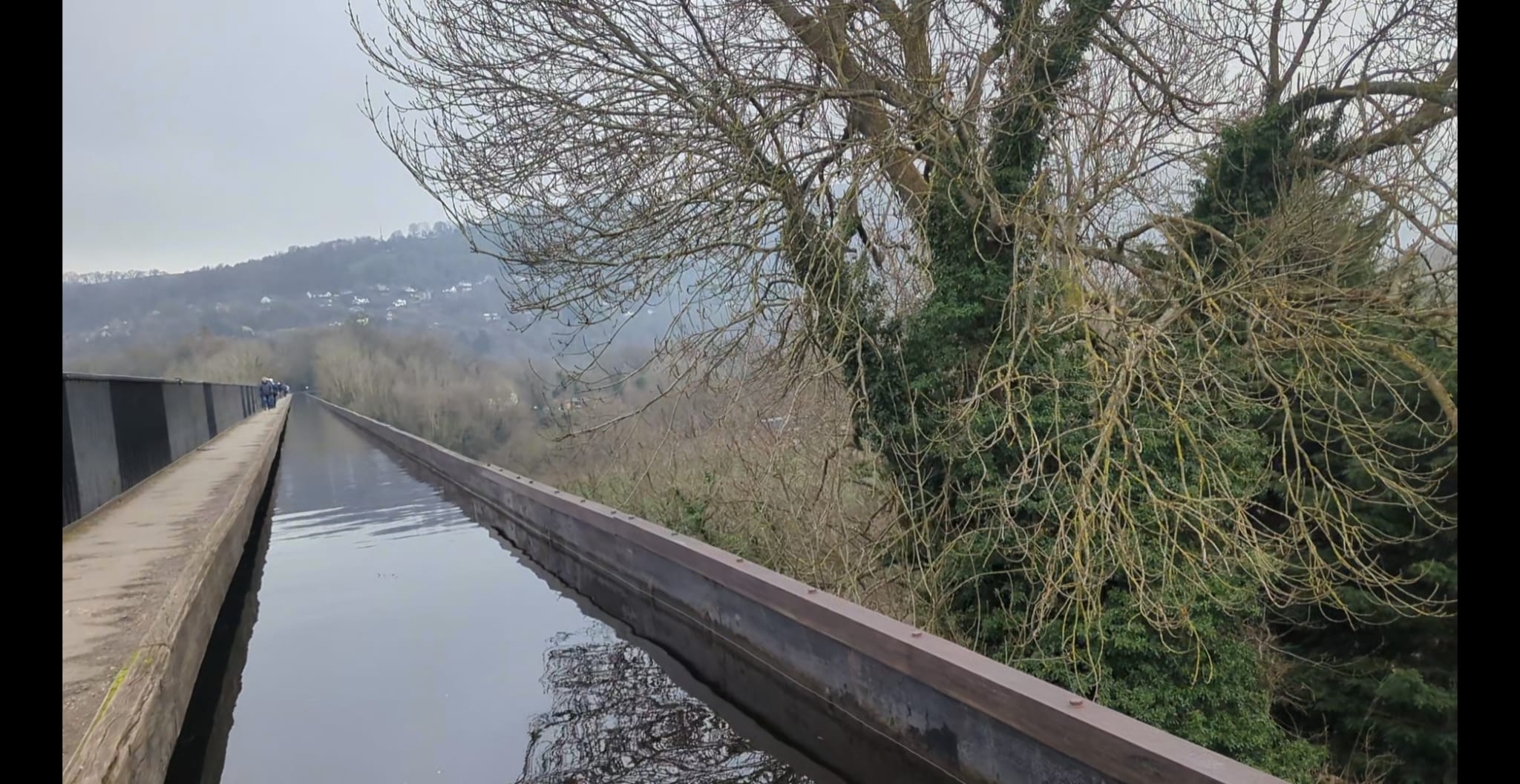
Yeah, that’s right - on one side of this glorified bathtub is not much more than a 39-metre drop into the Dee Valley. You, as a complete beginner, can take a boat within thirty minutes of signing the right paperwork. I, again, find this incredibly hilarious. In most areas of modern life, you need a risk assessment to boil a kettle. Here we were handed a 40-foot boat and pointed towards the highest canal aqueduct in the world.
One thing I have not mentioned yet is the tunnels. The canals were built to move freight across terrain that did not particularly care about canal engineering, which meant that occasionally the canal simply had to go straight through a hill.
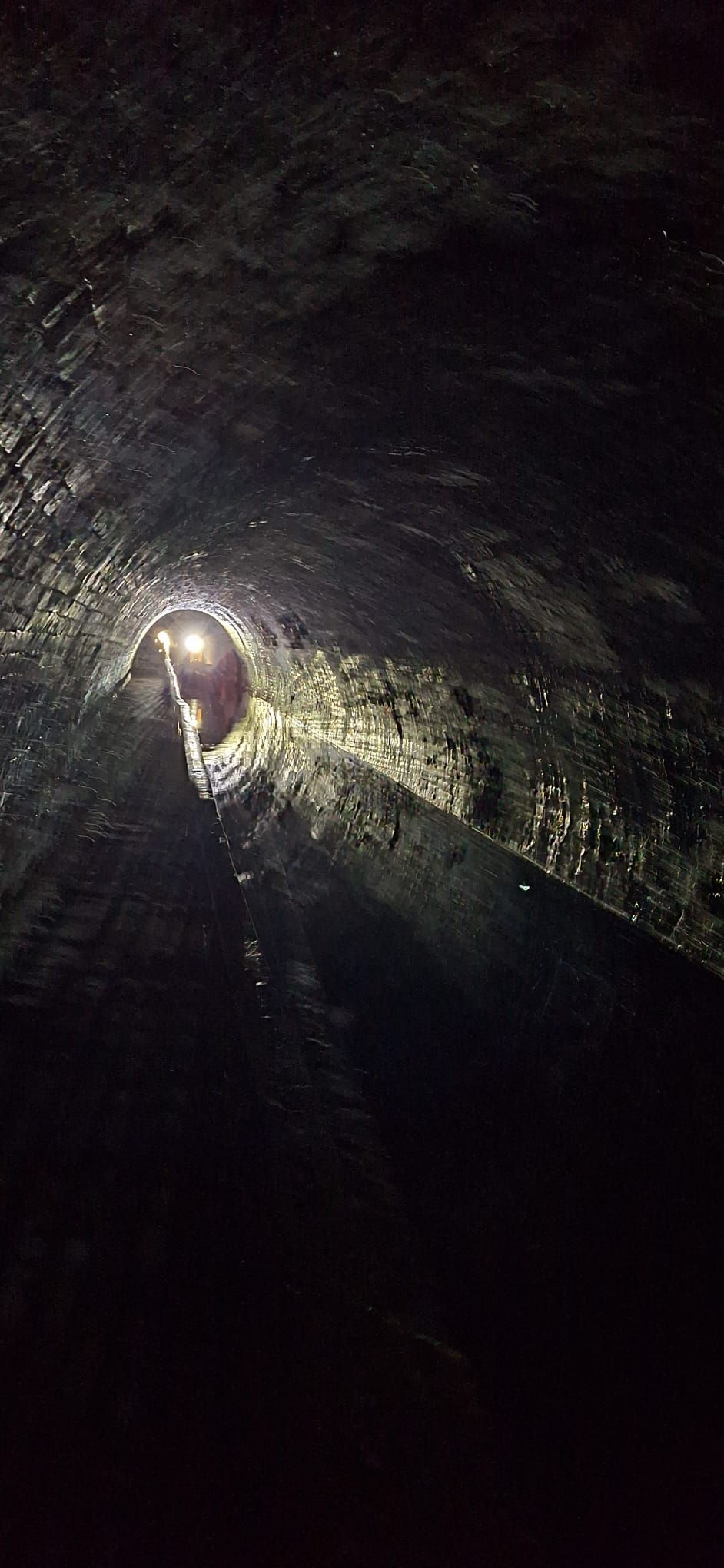
Today, you can just steer the boat through and let the engine do the work, but when horses were used, this was not an option. The solution was something wonderfully stupid and brilliant at the same time. The boatmen would lie on their backs on top of the boat and push against the tunnel walls with their feet, slowly ‘walking’ the boat through the darkness. This technique was called legging. Imagine spending your days hauling coal through a pitch-black humid tunnel, all by repeatedly pushing a thirty-tonne boat forward with your legs. Industrial logistics was not glamorous at all.
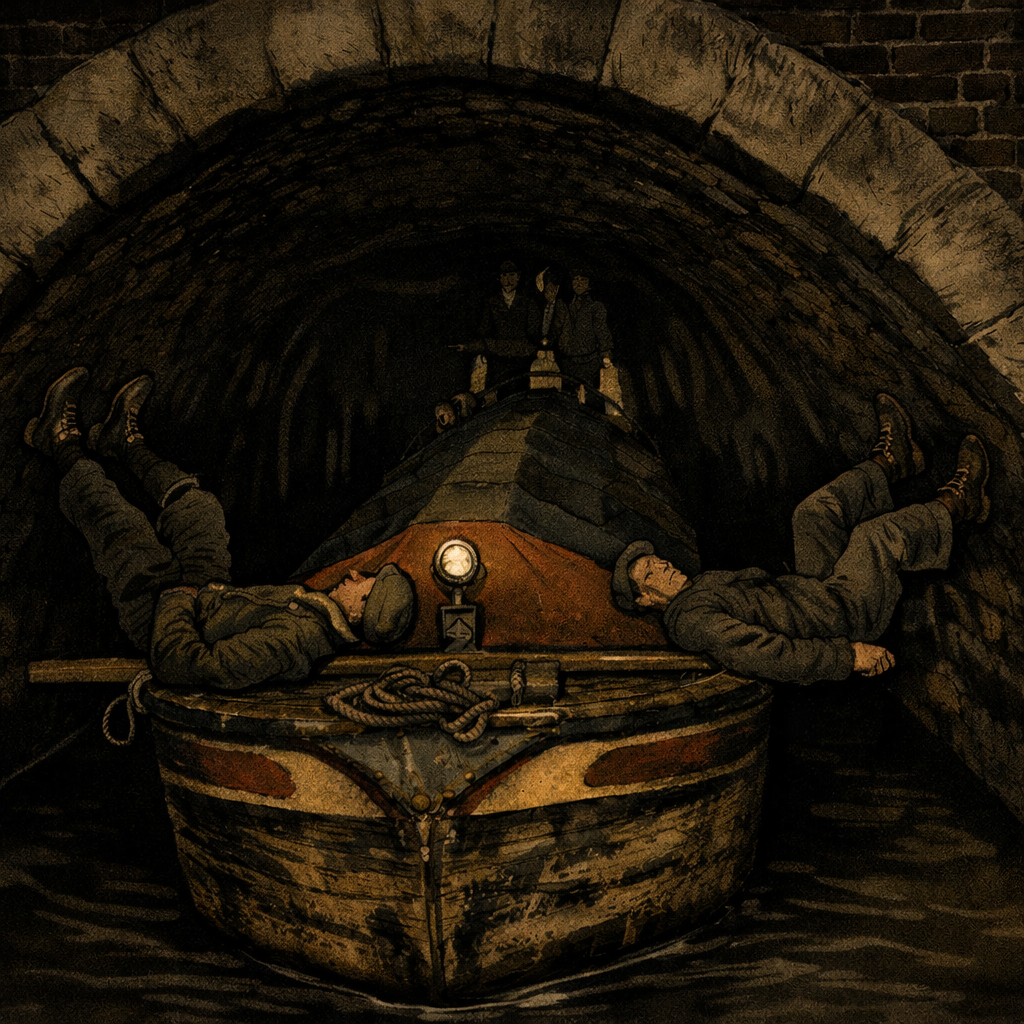
Me and the boys risking life and limb to bring coal to London, circa 1894
Now I was going to do this in a travel log originally, but that isn’t very interesting, and I want to make a wider point with this. Modern life removed responsibility in the name of safety, but responsibility is exactly what makes things meaningful. Canals invert that; they basically say, “here’s a boat, don’t break it, good luck”.
This is a lift bridge:
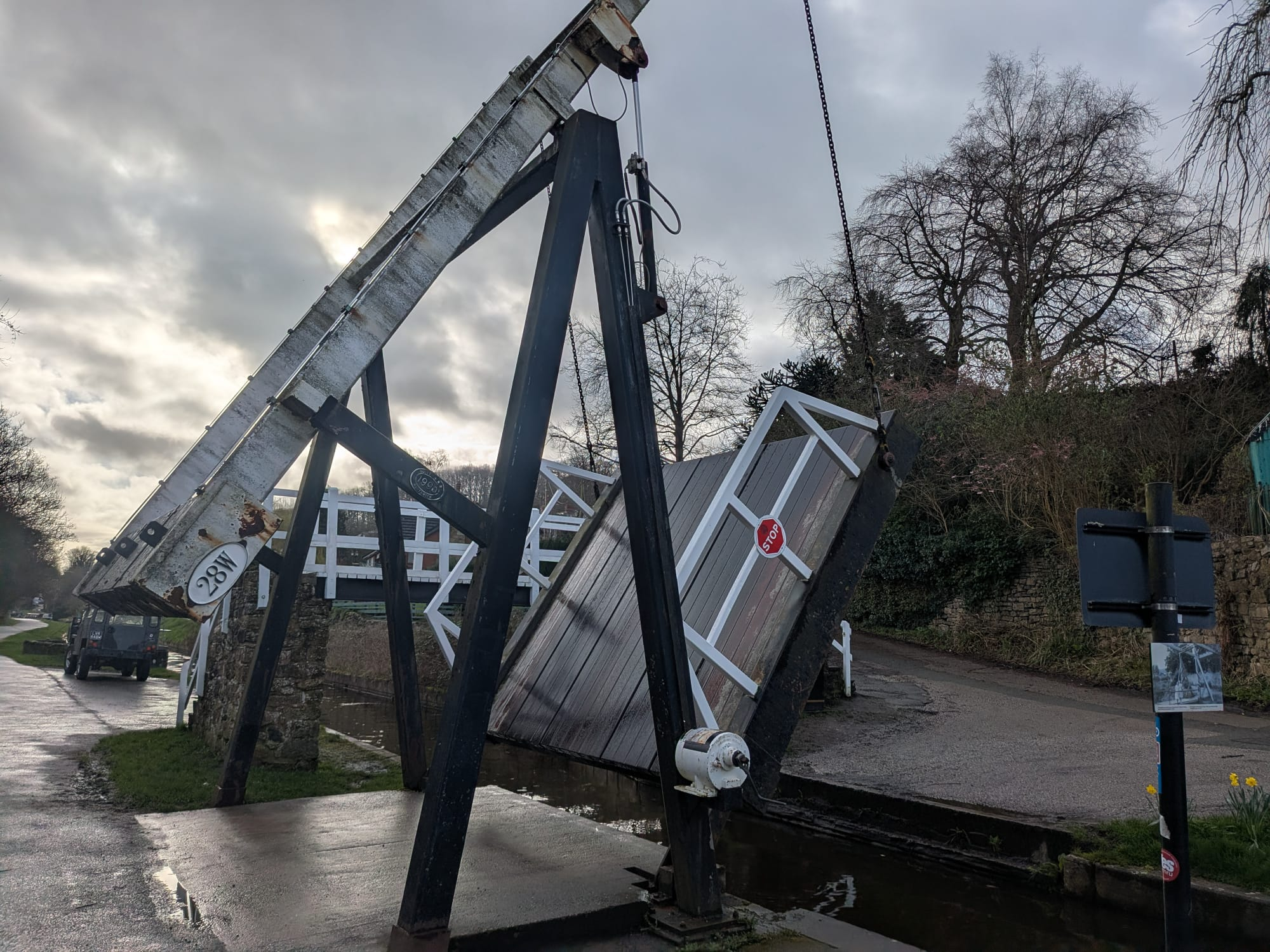
It is one of the many bits of canal-based infrastructure you need to interact with. It has no instructions, just a protruding square that your windlass fits over; you turn to raise it up or put it down. That is it. No rules on when it can be raised and lowered, no electrics, no licence required to do it. You jump off, raise it, your boat goes through, you lower it, and you get back on the boat. There is something special about that, though I can’t really explain it.
The same can be said for locks. We dealt with two locks on the canal between Chirk and Ellesmere, the Marston Upper and the Marston Lower. This is what it looks like inside a lock when it’s filling.
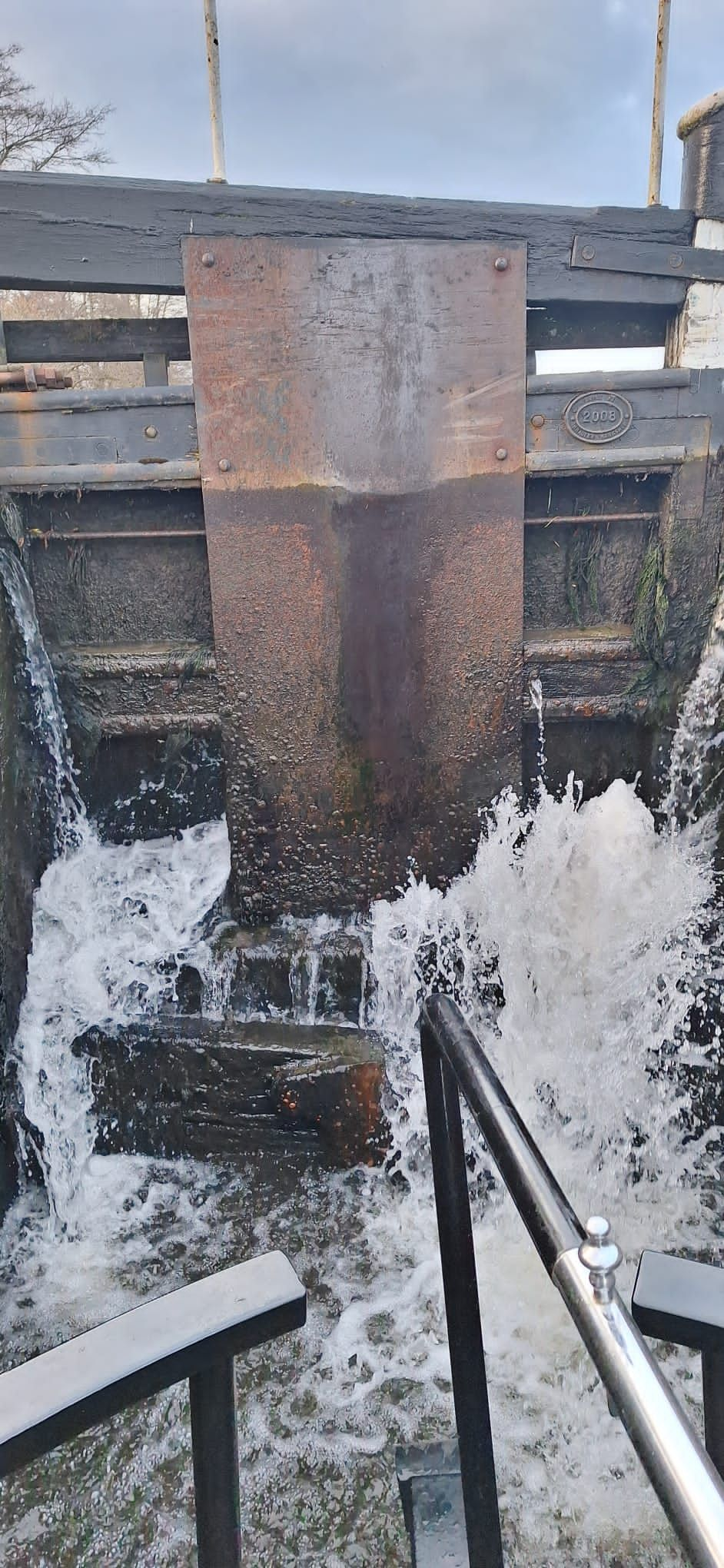
It’s a scary, tiring, smelly experience… but you also feel like you achieved something after doing your first lock.
I played a lot of video games growing up, and in many ways, I believe that video games have gotten easier as I have gotten older; that and walkthroughs and tutorials have gotten more accessible. There is something about finishing a mission you were stuck on for days with no help from anyone that feels lost nowadays. The sense of achievement I got from doing that lift bridge and those locks is still making me smile now.
I think my favourite part of the holiday was when we got caught on the side of the canal. I spent most of the holiday sitting on the head of the boat reading House of Leaves, occasionally guiding my dad through narrow sections of the canal or using a barge pole to push us out of ditches. On the fourth day, we had to turn around and head back to Trevor to drop the boat off the following morning - the winding hole we used was not very big. The front of the boat got stuck.
I jumped off the boat and shouted for my dad to come to the front and throw me the rope. He headed back to the tiller, and the combination of me pulling the rope and Dad reversing meant the boat could turn around… it also meant I was stranded in the mud and rain and would have to meet Dad downriver. No licence, training, or prep could teach us to do that - that was just common sense and the acceptance that I was going to get wet and muddy. When I got back on, I was wet, grumpy, muddy, and tired… and now, twenty-four hours later, I find myself smiling as I write this.
Aftercare
The canals were built to move freight across Britain’s industrial heartland. Two centuries later, they still offer something surprisingly rare: a place where you are trusted to deal with your own problems. You get stuck, you push. Something breaks, you fix it. And when you finally tie the boat back up at the end of the trip, you realise something strange - the responsibility was the relaxing part.
Verify this post
This page is published as a PGP clearsigned document. You can verify it like this:
gpg --keyserver hkps://keys.openpgp.org --recv-keys CA98D5946FA3A374BA7E2D8FB254FBF3F060B796
curl -fsSL 'https://eddiequinn.xyz/sigs/posts/2026/march/18th-century-distributed-logistics-infrastructure.txt' | gpg --verify